
New Jersey bankruptcy exemptions allow filers to protect home equity, vehicle value, wages, and retirement savings when filing Chapter 7. Clients may choose between New Jersey state exemptions or federal bankruptcy exemptions. The right selection preserves essential property for a fresh financial start. Maduabum Law Firm LLC guides clients through this critical decision.
Principales conclusiones
- Bankruptcy exemptions protect specific property from seizure by a Chapter 7 trustee during liquidation.
- Debtors must list protected property on Schedule C or the trustee sells it.
- New Jersey filers choose between state exemptions or federal bankruptcy exemptions before filing.
- Exemption limits apply to equity, calculated by subtracting secured debt from property value.
What Are Chapter 7 Bankruptcy Exemptions?
Chapter 7 Bankruptcy Exemptions Guide principles rest on a straightforward legal mechanism. Bankruptcy exemptions are laws that protect specific property from seizure by a Chapter 7 trustee. The same exemptions determine how much property factors into a Chapter 13 repayment plan. Property a debtor may keep, plus the right to part of the proceeds from sold property, is called exempt property.
Exemptions shape three critical outcomes in a New Jersey filing. They establish what property remains with the debtor. They reveal whether Chapter 7 is safe for a particular household. They calculate how much a debtor must repay under Chapter 13.
How Do Exemptions Work in a New Jersey Chapter 7 Case?
A Chapter 7 trustee liquidates non-exempt assets to pay creditors. Exempt property stays outside that liquidation process. The debtor keeps exempt assets outright.
Are Exemptions Automatic When Filing in New Jersey?
No. Exemptions are not automatic. A debtor must list protected property on Schedule C of the bankruptcy petition. Failure to list property on Schedule C allows the trustee to sell that property and pay all proceeds to creditors. This procedural requirement carries serious consequences for New Jersey filers who overlook it.
The distinction matters for anyone weighing Chapter 7 bankruptcy eligibility requirements. Exemption planning determines whether liquidation bankruptcy protects a home, vehicle, or retirement account. New Jersey’s exemption laws offer specific categories, and the correct Schedule C listing preserves those protections.
How Do You Choose Between State and Federal Exemptions?
New Jersey filers face a critical decision before filing Chapter 7. The state permits a choice between New Jersey exemption laws and the federal bankruptcy exemptions. The right selection preserves home equity, vehicle value, wages, and retirement savings as defined by New Jersey law. The wrong selection risks losing property a debtor assumed was protected.
En Chapter 7 Bankruptcy Exemptions Guide process starts with understanding that exemptions are not automatic. All debtors may use exemptions provided by pertinent state law and federal law other than bankruptcy law. Claiming property exempt under the wrong law may cause that property to be lost.
What Happens If a Filer Chooses the Wrong Exemption List?
A debtor who lists property under an incorrect exemption statute risks exposure to the trustee. The trustee may sell the property and distribute proceeds to creditors. Checking the laws before filing prevents this outcome.
What Factors Should a New Jersey Filer Compare?
The decision requires comparing both lists side by side. A filer evaluates which list protects more equity in each asset category.
A filer cannot mix and match individual exemptions from both lists. The choice applies to the entire exemption schedule. Consulting a local bankruptcy lawyer in New Jersey helps filers evaluate which list preserves more property.
How Does a Filer Make the Final Selection?
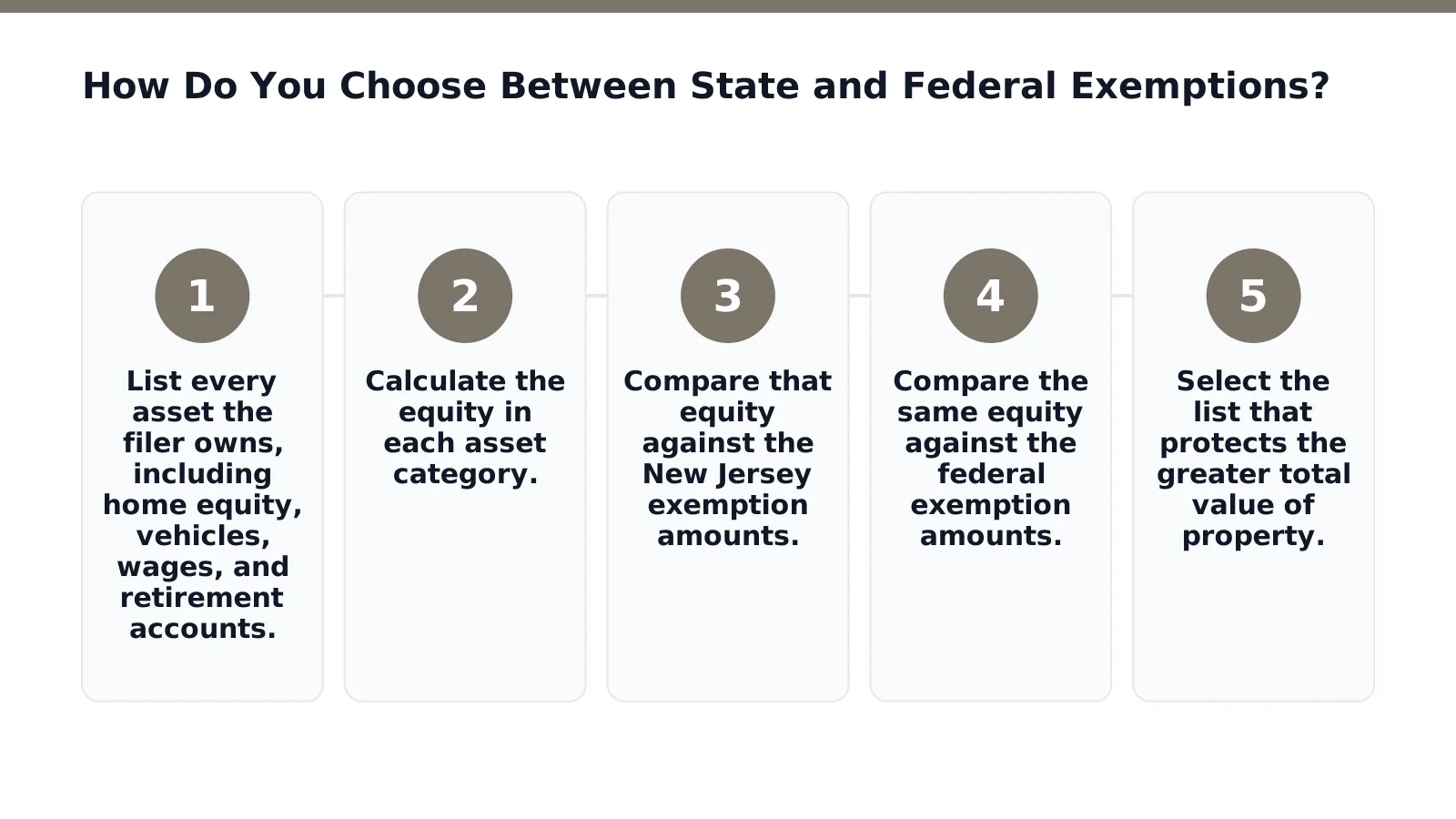
- List every asset the filer owns, including home equity, vehicles, wages, and retirement accounts.
- Calculate the equity in each asset category.
- Compare that equity against the New Jersey exemption amounts.
- Compare the same equity against the federal exemption amounts.
- Select the list that protects the greater total value of property.
The choice is binding once the case is filed. A debtor who selects the wrong list may lose property that the other list would have protected.

What Property Can You Keep in a New Jersey Bankruptcy?
New Jersey bankruptcy exemptions protect a filer’s home, vehicle, retirement accounts, and other essential property. The law provides a clear path to a fresh start without losing everything.
Many individuals delay filing because they fear losing their home or car. That fear blocks access to relief that could reset their financial future. The reality is different. Exemption laws exist specifically to shield the property a person needs to live and work.
How Does Equity Affect What Property Is Protected?
An exemption limit applies to equity, not the total value of the property. Equity is the difference between what the property is worth and what is still owed on it.
A car with an outstanding loan may have very little equity. The equity in that vehicle is minimal. The exemption covers that small slice of value, not the full price tag. This distinction matters because many filers discover they have far less exposed equity than expected.
What Steps Should a Filer Take to Protect Property?
- List all property on Schedule C of the bankruptcy petition. Exemptions are not automatic. Failing to claim an item means the trustee may sell it and distribute the proceeds to creditors.
- Calculate equity for each asset. Subtract any secured debt from the property’s current market value.
- Choose between New Jersey state exemptions and the federal exemption list. New Jersey allows filers to select the set that better protects their assets.
- Verify retirement account protections. Most qualified retirement accounts receive full exemption under federal law, shielding those savings completely.
A Chapter 7 Bankruptcy Exemptions Guide helps filers navigate these choices. The right exemption selection preserves a home, a car, and the tools needed for a stable restart.
What Happens to Property You Cannot Exempt?
Property that exceeds New Jersey exemption limits or falls outside protected categories becomes part of the bankruptcy estate. The trustee may sell that property and distribute the proceeds to creditors. The law may allow a debtor to keep some property or entitle the debtor to part of the proceeds if the property is sold after the case is filed, according to the District of New Jersey.
The outcome depends heavily on the type of property and the debts attached to it. Secured property follows a different path than unsecured assets.
Can a Debtor Keep Making Payments on Secured Property?
Secured property carries a loan, such as a mortgage on a home or a financing agreement on a vehicle. If the debtor is current on payments. The equity falls within the exemption limits, the debtor may elect to continue making payments and keep the property. The treatment depends on the specific circumstances of the debt.
Falling behind on payments changes the equation. The lender retains the right to repossess or foreclose regardless of the bankruptcy filing. Exemptions protect equity from the trustee. Exemptions do not erase a lender’s security interest.
What Debts Survive a Chapter 7 Discharge?
Not all obligations disappear when the court issues a discharge. Certain debts cannot be erased in bankruptcy. Common examples include most student loans, recent tax debts, child support arrears, and alimony obligations. These non-dischargeable debts remain enforceable after the case closes.
The trustee’s role is straightforward. The trustee liquidates non-exempt assets. Creditors receive payment according to priority rules. The debtor receives a discharge of qualifying debts. Property that fits within an exemption category, up to the dollar amount listed, stays with the debtor. Everything else is at risk.
A debtor navigating the Chapter 7 bankruptcy court process benefits from understanding which assets face exposure before filing. The Chapter 7 Bankruptcy Exemptions Guide helps identify protected property early. Early identification prevents surprises at the 341 meeting of creditors.
How Do You Protect a Financed Home or Car?
Protecting a financed home or vehicle in Chapter 7 bankruptcy requires understanding New Jersey’s unique exemption system. The right choice between state and federal exemption lists preserves significant home equity and vehicle value. A wrong selection puts those assets at risk.
New Jersey’s exemption laws are unique, and understanding them is critical before filing. Filers must evaluate their property equity against available exemption amounts. The calculation determines what the trustee can seize and what the debtor keeps.
What Happens to a Financed Home in Chapter 7?
The home’s equity drives the outcome. Equity equals the market value minus the mortgage balance and any other liens. If the available exemption covers that equity, the home remains protected. The mortgage lender retains its security interest regardless. Missed payments still lead to foreclosure even after discharge.
Can a Financed Car Be Protected?
Vehicle protection follows the same equity analysis. The exemption covers the debtor’s ownership stake, not the full value. If the chosen exemption covers that amount, the vehicle stays. The lender’s lien survives the bankruptcy.
Maduabum Law Firm LLC takes the time to understand each client’s circumstances before developing the right legal strategy. The firm’s attorneys calculate equity positions and compare exemption options. This analysis determines whether a Chapter 7 vs Chapter 13 bankruptcy filing makes sense for the debtor’s situation.
Preguntas frecuentes
What exemptions protect my home and car in a New Jersey Chapter 7 case?
New Jersey bankruptcy exemptions protect home equity, vehicle value, wages, and retirement savings. Filers choose between state exemptions or federal bankruptcy exemptions to preserve these assets.
Do I automatically get exemptions when I file Chapter 7 in New Jersey?
No. Exemptions are not automatic. A debtor must list protected property on Schedule C of the bankruptcy petition or the trustee sells that property.
Conclusión
Chapter 7 bankruptcy exemptions in New Jersey protect the assets necessary for a fresh financial start. Only when claimed correctly on the bankruptcy petition. Understanding the distinction between equity and property value, selecting the appropriate exemption list, and calculating what the trustee can seize determines whether a home, vehicle, or other essential assets remain protected. The decision to file Chapter 7 requires careful analysis of individual circumstances and available exemptions before proceeding to the 341 meeting of creditors.