A Chapter 7 bankruptcy usually takes about four to six months from filing to final discharge. The deadline to complete the financial management training course is 60 days after the first date set for the meeting of creditors. The process begins with filing the petition, followed by a Meeting of Creditors around day 20 to 40. Debtors must complete a financial management course within 60 days after that meeting to receive their discharge.
Principales conclusiones
- Chapter 7 bankruptcy discharge takes four to six months from filing to final discharge.
- Debtors must complete financial management training within 60 days after the 341(a) meeting.
- Credit counseling course completion within 180 days before filing blocks the entire case if skipped.
- Automatic stay takes effect on filing date, halting creditor collection efforts and legal actions.
What is the Chapter 7 bankruptcy discharge timeline?
En Chapter 7 Bankruptcy Discharge Timeline typically spans four to six months from filing to final discharge. Debtors who complete every required step without delay move through the process efficiently.
What happens before filing Chapter 7?
A mandatory credit counseling course must be completed within 180 days before filing. Skipping this prerequisite blocks the entire case from moving forward. This requirement ensures debtors understand their options before entering bankruptcy.
What are the key steps after filing?
The process follows a strict sequence of deadlines. Missing any one of them stalls the discharge.
- File the petition. On Day 1, the debtor submits the bankruptcy petition to the court and pays the filing fees.
- Submit tax returns. Between Day 13 and Day 33, the debtor provides tax returns to the trustee, at least seven days before the meeting of creditors.
- Attend the 341(a) meeting. The meeting of creditors occurs between Day 20 and Day 40. The trustee and any attending creditors question the debtor under oath.
- Complete financial management training. Within 60 days after the first scheduled 341(a) meeting, the debtor finishes a debtor education course. This deadline falls between Day 80 and Day 100.
How fast can a simple case be discharged?
A simple “no asset” case, where the debtor has no property available for liquidation, can be discharged in a matter of weeks after all steps are completed. The court grants the discharge once every requirement is satisfied. More complex cases take the full four to six months. Debtors who delay document submission or miss the education course deadline risk having their case dismissed without a discharge. Understanding Chapter 7 bankruptcy benefits helps debtors appreciate why completing each stage on time matters.
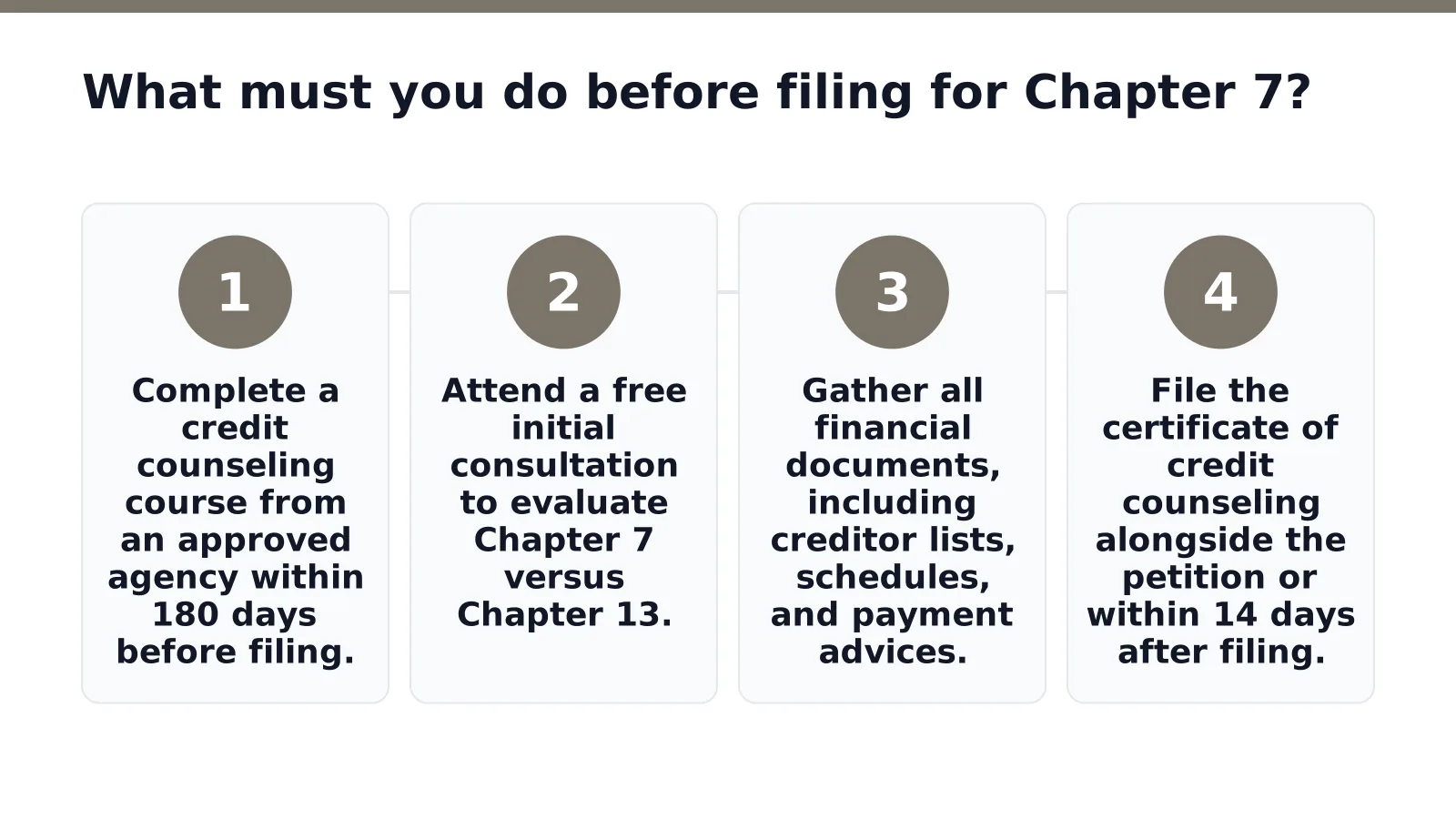
What must you do before filing for Chapter 7?
En Chapter 7 Bankruptcy Discharge Timeline begins well before any petition reaches the court. Debtors must complete a credit counseling course from an approved provider within 180 days before filing. Missing this step prevents the case from proceeding.
Preparation involves several concrete actions. Each one protects the debtor’s eligibility and keeps the discharge on schedule.
What documents must be gathered before filing?
Financial documentation forms the backbone of any Chapter 7 petition. Debtors need lists of creditors, schedules of assets and liabilities, statements of financial affairs, and recent payment advices. These materials give the trustee a complete picture of the debtor’s financial situation. Incomplete paperwork causes delays that stretch the discharge timeline by weeks or months.
How does the initial consultation shape the filing decision?
A free initial consultation helps determine whether Chapter 7 or Chapter 13 fits the debtor’s financial goals. The attorney spends an hour reviewing the client’s circumstances before recommending a path forward. Maduabum Law Firm LLC takes time to understand each client’s unique situation before developing a legal strategy. This personalized approach ensures the debtor files under the correct chapter from day one.
The pre-filing sequence follows a clear order:
- Complete a credit counseling course from an approved agency within 180 days before filing.
- Attend a free initial consultation to evaluate Chapter 7 versus Chapter 13.
- Gather all financial documents, including creditor lists, schedules, and payment advices.
- File the certificate of credit counseling alongside the petition or within 14 days after filing.
Debtors who skip the counseling course lose eligibility immediately. Filing incomplete schedules can lead to motions to dismiss. The Chapter 7 bankruptcy process rewards preparation, not improvisation.

What happens during the first month after filing?
The first month after filing a Chapter 7 petition sets critical deadlines in motion. Debtors must submit several documents within 14 days to avoid case dismissal. The Chapter 7 Bankruptcy Discharge Timeline begins with immediate creditor protections and strict paperwork requirements.
What documents are due within the first two weeks?
Filing the petition on Day 1 triggers a 14-day window for completing the remaining paperwork. Debtors who did not file everything with the initial petition must submit the certificate of credit counseling, all schedules, statements, and payment advices during this period. Missing this deadline risks dismissal of the case. The court requires these documents to verify income, assets, and compliance with pre-filing education mandates.
How does the automatic stay protect debtors immediately?
En automatic stay takes effect on the filing date itself. This court order halts creditor collection efforts, stops harassing phone calls, and blocks legal actions against the debtor. Eviction proceedings and foreclosure sales also pause under this protection. The stay remains in force throughout the bankruptcy process, giving debtors breathing room to reorganize their finances without creditor pressure.
- File remaining documents within 14 days of the petition date. Submit the credit counseling certificate, schedules, and payment advices if not already provided.
- Prepare the Statement of Intention before 30 days elapse or the meeting of creditors occurs. This document declares whether the debtor will surrender secured property or reaffirm the debt.
- Gather tax returns for the trustee. The most recent return must reach the trustee at least 7 days before the scheduled 341 meeting.
The automatic stay provides immediate relief from aggressive collection tactics. Creditors face court sanctions for violating this protection. Debtors who understand these early requirements position themselves for a smoother path toward discharge.
When does the meeting of creditors occur?
The meeting of creditors, also called the 341(a) meeting, occurs between day 20 and day 40 after filing the Chapter 7 bankruptcy petition. This window gives the trustee time to review the filed schedules and statements before questioning the debtor. Missing this meeting creates serious consequences, including dismissal of the case.
En Chapter 7 Bankruptcy Discharge Timeline depends heavily on this meeting date. The discharge clock starts running from the first date set for the 341(a) meeting. A debtor who fails to appear risks losing the entire bankruptcy protection.
What happens at the 341(a) meeting?
The trustee examines the debtor under oath about finances and assets. Creditors may attend and ask questions about the debtor’s financial situation. The meeting typically lasts only 10 to 15 minutes for straightforward cases.
- The debtor arrives with photo identification and proof of Social Security number.
- The trustee places the debtor under oath.
- The trustee asks about assets, income, expenses, and recent financial transactions.
- Creditors present may ask limited questions about debts or property.
- The trustee concludes the meeting and notes any follow-up items.
What deadline follows the meeting of creditors?
The debtor must complete a financial management training course within 60 days after the first meeting date. Failing to file the completion certificate by this deadline blocks the discharge. The court then closes the case without eliminating debts.
How is the discharge date determined and what follows?
En Chapter 7 Bankruptcy Discharge Timeline ends with a specific court order. The bankruptcy discharge date is the day all qualifying debts are officially wiped away. After that date, creditors cannot attempt to collect on those debts that were the subject of the bankruptcy discharge.
The discharge is typically granted after the 60-day period for objections has passed without any challenges. No creditor filed a challenge during that window. The court then issues the discharge order without a hearing.
What happens immediately after the discharge is granted?
- The court enters the discharge order on the docket.
- The clerk mails a copy to the debtor and all creditors.
- Creditors must stop all collection activity on discharged debts.
- The debtor keeps exempt property and receives a fresh start.
Does the debtor need to do anything after discharge?
No further filings are required from the debtor. The discharge order speaks for itself. Creditors who violate the discharge face court sanctions.
Maduabum Law Firm LLC provides legal guidance for debt relief matters, including Chapter 7 bankruptcy. Clients who need help understanding the Chapter 7 discharge process receive focused support from attorneys familiar with each deadline.
Preguntas frecuentes
How long does a Chapter 7 bankruptcy discharge take?
The Chapter 7 bankruptcy discharge timeline typically spans four to six months from filing to final discharge. A simple no-asset case can be discharged in a matter of weeks after all steps are completed.
What is the deadline to complete the financial management course?
The financial management course must be completed within 60 days after the first scheduled 341(a) meeting. This deadline falls between Day 80 and Day 100 after filing.
What happens if you skip the credit counseling course before filing?
Skipping the mandatory credit counseling course, which must be completed within 180 days before filing, blocks the entire case from moving forward. The court will not process the bankruptcy petition without this prerequisite.
Conclusión
Understanding the Chapter 7 bankruptcy discharge timeline empowers debtors to navigate each critical deadline with confidence. From the initial 14-day filing window through the 341(a) meeting and final discharge order, preparation and adherence to court requirements determine success. Debtors who meet every obligation position themselves for a fresh financial start within four to six months. Taking action today by gathering required documents and understanding these timelines transforms the bankruptcy process from overwhelming to manageable.