Essential Documents to Bring for Your First Meeting With an Immigration Attorney

Essential Documents to Bring for Your First Meeting With an Immigration Attorney: Complete Checklist and Preparation Guide
First meetings with an immigration attorney are the most efficient way to evaluate eligibility, identify evidence gaps, and map a practical pathway forward, provided you bring the right documents. This guide explains what to bring to your first meeting with an immigration attorney, why each item matters, and how properly organized evidence speeds up case assessment and reduces the chance of delays or requests for evidence. Readers will learn a clear, scenario-based checklist for family petitions, adjustment of status, asylum, naturalization, and consular processing, plus actionable steps for handling lost or foreign-language records. The article also walks through best practices for organizing and presenting documents, sample lists of high-value questions to ask during intake, and tools for verifying form authenticity. Throughout, the focus remains on practical preparation—what to bring, how to document it, and how to use the checklist during your consultation—so you can maximize the value of your first appointment with an immigration attorney.
What Are the General Documents You Must Bring to Your First Immigration Consultation?
A core set of documents applies to nearly every immigration consultation because they establish identity, biographical history, and prior immigration interactions. These core documents allow an attorney to verify identity, confirm entry and status, and begin assembling a timeline that supports eligibility or identifies risks, which directly reduces unnecessary follow-ups. Before the meeting, prepare originals where available and clear copies for the attorney to keep; digital scans are also helpful for remote intake and immediate review. The following section lists the most essential item types and explains why each matters for adjudication and strategy planning.
Which Identity and Travel Documents Are Required for All Immigration Cases?
Identity and travel documents prove who you are and when you entered the United States, forming the foundation for most immigration filings. Bring current and expired passports from all countries of citizenship, birth certificates or certified copies, and secondary identification such as a national ID card or driver’s license to confirm biographical details and name consistency. Original documents carry the most evidentiary weight, but certified copies or clear digital scans are acceptable for initial review if originals are unavailable; note that some filings later require certified copies or notarized translations. Consistent names, dates, and places across these documents help avoid delays and strengthen credibility during adjudication, so check that spellings and birthdates match before the appointment.
What Proof of Legal Entry and Immigration Status Should You Prepare?
Proof of legal entry and immigration status shows how and when you entered the country and any authorized periods of stay that may affect eligibility for benefits. Collect I-94 arrival/departure records, visa stamps and pages from passports, prior approval or denial notices, and any notices from immigration authorities that document prior filings or status changes. If you do not have physical copies of an I-94, make a record of how you entered (airline, port, approximate date) and be prepared to retrieve electronic records after the meeting; the attorney can advise on retrieval steps. Clear evidence of lawful entry or parole, or records explaining unauthorized presence, informs strategy and potential relief options, and it lets counsel evaluate eligibility for benefits like adjustment of status or naturalization.
How Do Biographical Details and Photographs Support Your Immigration Case?
Biographical details and photographs anchor timelines and identity verification and are required in many USCIS forms and interview packets. Prepare a chronological list of addresses and employment for the past five to ten years, include school attendance and travel history where applicable, and bring passport-style photos meeting agency specifications for the form you plan to file. Photographs must meet size and background rules and be recent; attorneys often confirm photo specs during intake to avoid rejections. Accurate and consistent biographical details reduce ambiguity in applications and help attorneys craft timelines that corroborate claims of continuous residence, employment history, or family relationships.
Before viewing the quick-reference comparison below, gather these categories so your attorney can immediately assess the strongest evidence you have and identify missing items to obtain.
This table summarizes the core document types you should bring for an intake appointment, and it helps prioritize which originals or certified copies to locate first. Having items from each category on hand will let your attorney begin form selection and strategy immediately.
What Specific Documents Are Needed for Different Types of Immigration Cases?
Different immigration pathways require distinct supporting evidence because eligibility turns on different factual elements such as relationship, admissibility, persecution history, or continuous physical presence. Organizing documents by pathway helps attorneys triage case types quickly and advise on immediate next steps like medical examinations, translations, or affidavit preparation. The subsections below list key documents for each common pathway and highlight frequent pitfalls to avoid.
Which Documents Are Essential for Family-Based Petitions and Visas?
Family-based petitions depend on proof of the qualifying relationship and financial ability to support the beneficiary, so bring primary civil documents and corroborating evidence. Core items include an I-130 supporting packet (when applicable), marriage certificate or proof of relationship, birth certificates for children, and evidence of cohabitation or shared finances such as joint leases, joint bank statements, or photos documenting shared life. Also prepare sponsor financial documents commonly needed for affidavits of support, such as recent tax records and pay stubs, to demonstrate ability to meet income requirements. Missing relationship corroboration is a common cause of RFEs, so bring multiple types of relationship evidence to establish bona fides clearly.
What Paperwork Is Required for Adjustment of Status Applications?
Adjustment from nonimmigrant to lawful permanent resident status requires both identity evidence and proof of eligibility, including medical and admissibility documentation. For I-485-related intake, bring your green card packet if you have one, birth certificate, passport pages with visas and I-94, two passport-style photos, and any prior immigration petitions or approval notices. Additionally, obtain medical examination results on the appropriate form(s) and keep them sealed per attorney guidance, and prepare records that show continuous presence or eligibility exceptions. Financial documentation and criminal records, if any, are also essential because they affect admissibility and public charge assessments.
What Evidence Should You Bring for Asylum or Refugee Claims?
Asylum and refugee claims rely heavily on detailed, corroborating evidence of past persecution or a well-founded fear of future harm, so the initial intake should focus on narrative and supporting documentation. Bring a detailed personal statement outlining events and dates, country condition reports or news clippings if available, medical records documenting injuries, police or detention records, and witness statements or affidavits that corroborate your account. Confidentiality and careful organization matter greatly for these claims; attorneys will advise how to protect sensitive evidence and build corroboration while minimizing risks to witnesses. When direct documentary proof is limited, corroborating country conditions and expert reports can significantly strengthen an applicant’s case.
What Documents Are Necessary for Naturalization and Citizenship Applications?
Naturalization applicants must document lawful permanent resident status, continuous residence, and good moral character, so bring core proof of status and supporting records for residence and tax compliance. Essential items include your Permanent Resident Card (green card), tax records for relevant years, documents showing physical presence and continuous residence such as leases and employment records, and selective service registration information when applicable. Additional evidence to support moral character claims may include court disposition records if arrests occurred and letters of support from employers or community leaders. Preparing these items at intake allows the attorney to flag potential issues early and advise on remedial steps before filing.
Which Papers Are Important for Consular Processing and Overseas Interviews?
Consular processing requires civil and background documents formatted for an overseas immigrant visa interview, which often include localized requirements from the interviewing embassy. Collect civil documents such as birth and marriage certificates, police certificates from countries where you resided, DS-260 supporting evidence corresponding to your petition, and passport-style photos that meet consular specifications. Because some embassies have country-specific evidentiary rules, note the consulate hearing location and be prepared to obtain police or civil records from foreign authorities. Clear organization of these documents helps prevent delays at the consular interview stage and reduces the chance of a case being returned for missing paperwork.
This comparison table helps you identify the core packet you need to prepare for the pathway that best matches your case and lets your attorney determine missing items quickly.
How Can You Prepare for Your First Meeting With an Immigration Lawyer?
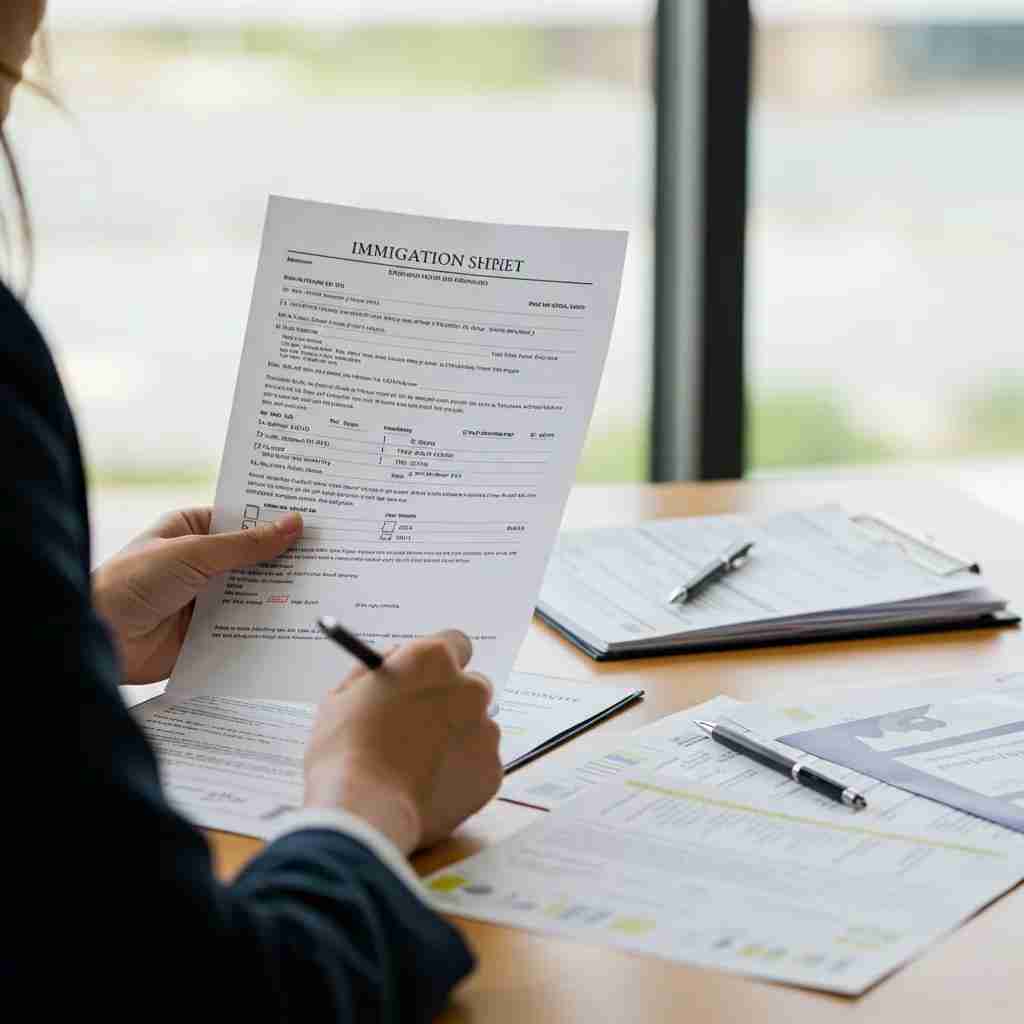
Preparation multiplies the value of a first meeting: organized evidence and a clear list of questions let counsel assess eligibility, timing, and likely next steps without repeated intake sessions. Preparing a document index, timelines for residence and employment, and a prioritized question list enables a focused review during the appointment. The following subsections explain best practices for organizing records, sample high-value questions to ask, and practical options for handling missing or unavailable documents so the meeting can proceed efficiently.
What Are the Best Practices for Organizing and Presenting Your Documents?

Organizing documents with a simple, consistent folder system saves time and decreases the chance of overlooking key evidence during intake. Use labeled physical folders and a matching digital folder structure with an index sheet that lists all documents in order, bring originals with copies, and indicate which items are certified copies or translations. If the attorney allows electronic pre-submission, scan documents at high resolution and ensure file names clearly reflect document type and date to speed review. Clear organization helps the attorney identify priority evidence, suggest immediate next steps, and estimate filing needs during the consultation.
Which Questions Should You Prepare to Ask Your Immigration Attorney?
High-value questions enable you to understand eligibility, timelines, risks, and costs in a single appointment and guide the attorney to focus analysis on the most consequential issues. Prepare questions about eligibility for the specific benefit you seek, likely timelines and potential delays, what evidence is critical versus supplemental, and what the attorney recommends as the next three action items. Also ask about confidentiality, potential immigration consequences of adverse facts, and whether replacements or alternative evidence will suffice for missing records. These questions create a practical roadmap for the attorney to advise on strategy and immediate evidence-gathering tasks.
How Should You Handle Missing or Unavailable Documents?
When originals are missing, timely use of secondary evidence and affidavits can bridge gaps while you obtain replacements from foreign authorities or government agencies. Prepare notarized affidavits describing efforts to obtain originals, collect secondary records such as school, church, or municipal records, and ask counsel about timelines for requesting certified replacements from foreign registrars. Attorneys can advise which alternatives USCIS typically accepts and how to structure affidavits for maximum probative value. Proactive documentation of your attempts to obtain originals and a plan for substitution helps preserve credibility and reduces the chance of adverse findings or denials.
- Create an index of documents arranged by category so the attorney can follow your file quickly.
- Assemble originals and clear copies for identity, entry, and relationship evidence to expedite review.
- Prepare a concise timeline of addresses, employers, and trips to support residence-based claims.
- Draft a brief case summary describing the immigration history and key questions to prioritize the intake.
These steps focus the intake and allow your attorney to identify critical documents and missing evidence rapidly, making the consultation a productive use of time.
After these organizational steps, many clients find that a short pre-meeting checklist of the most critical documents further reduces follow-ups and speeds case assessment.
Why Is Bringing Complete and Accurate Documents Crucial for Your Immigration Case?
Complete and accurate documentation is the primary defense against processing delays, requests for evidence, and potential adverse findings such as denials or allegations of misrepresentation. Providing complete evidence up front increases the chance of a clean adjudication and lets an attorney design legal arguments and exceptions where needed, shortening overall timelines. Incomplete submissions commonly trigger RFEs that extend adjudication by months and sometimes lead to denials that are costly to appeal or refile. The subsections below explain how proper documentation prevents delays, the legal implications of gaps, and how legal review by a firm can reduce risk.
How Does Proper Documentation Prevent Delays and Requests for Evidence?
Proper documentation aligns your submission with adjudicator expectations and addresses common RFE triggers by presenting clear, corroborated evidence at filing time. An initial packet that includes primary documents and supporting corroboration—such as joint financial records for family petitions or medical reports for certain humanitarian claims—reduces the need for the agency to request clarifying proof. This leads to shorter processing times because adjudicators can rule on the merits rather than asking for missing pieces. Preparing comprehensive evidence also helps your attorney anticipate likely RFEs and proactively include responses or additional proof to minimize later interruptions.
What Are the Legal Implications of Missing or Incomplete Documents?
Missing or inconsistent documents can lead to outcomes ranging from RFEs to outright denials and, in extreme cases, allegations of misrepresentation that carry longer-term immigration consequences. An omission that appears intentional may trigger heightened scrutiny and potentially affect future filings, whereas innocent errors often can be corrected if addressed promptly and transparently. Attorneys assess whether omissions are harmless gaps or material misrepresentations and recommend remedial actions, such as submitting affidavits, certified replacements, or motions to reopen when a denial has already occurred. Understanding these distinctions guides how aggressively to pursue replacement evidence before filing.
How Does Maduabum Law Firm LLC Help Ensure Your Documents Are Correct?
Maduabum Law Firm LLC provides structured intake and document review services tailored to reduce RFEs and processing delays by ensuring filings include the right originals, certified copies, and translations. During intake, attorneys at the firm review submitted evidence, identify documentary gaps, and advise on certified translation sources and replacement document procedures to strengthen the initial filing. By coordinating document collection and offering targeted pre-submission review, the firm aims to lower the likelihood of RFEs and speed adjudication while maintaining confidentiality and professional handling of sensitive records. Clients in Newark, NJ and elsewhere benefit from this focused document review as part of the firm’s immigration services.
The firm’s review process complements the preparatory steps described earlier and can be arranged as part of an initial confidential consultation to assess document readiness and next steps.
Common RFE triggers often relate to inconsistent dates, missing signatures, or lack of relationship corroboration, and these are exactly the areas where a pre-filing review adds value.
- Inconsistent biographical details often cause requests for clarification.
- Missing certified translations can render foreign documents unusable.
- Insufficient relationship evidence frequently leads to RFEs in family petitions.
Including those checks before filing reduces downstream work and potential denials.
What Are the Most Common USCIS Forms and Supporting Documents to Bring?
Knowing the forms likely relevant to your case helps your attorney prepare accurate filing packets and determine which supporting documents must accompany each form. Common forms encountered at initial consultations include petitions and applications such as I-130 for family petitions, I-485 for adjustment of status, and N-400 for naturalization, in addition to ancillary forms that may be required. The subsections below explain which forms to gather for family and adjustment matters, the supporting evidence typically needed across form types, and practical verification steps to ensure the forms you present are complete and authentic.
Which USCIS Forms Should You Bring for Family Petitions and Adjustment of Status?
For family-based and adjustment of status consultations, bring the primary petition forms and any previously filed forms or notices to show filing history and eligibility relationships. Key items include a completed or draft I-130 packet, copies of any filed I-485 documents, notices of action for prior petitions, and ancillary forms such as I-864 for financial support and I-765/I-131 if work/travel authorization is sought. Bringing drafts or prior submissions allows the attorney to check for version compliance, missing signatures, and correlating evidence needed at filing. This practice prevents using outdated form editions and reduces the risk of rejection on technical grounds.
What Supporting Evidence Is Needed for Forms Like I-130, I-485, and N-400?
Supporting evidence typically overlaps across forms—identity documentation, proof of status, residency and physical presence, relationship proof, and financial records—yet each form includes unique documentary priorities. For I-130, emphasize relationship proof and civil documents; for I-485, prioritize medical exams, admissibility evidence, and prior immigration history; for N-400, emphasize continuous residence, tax compliance, and moral character documentation. Organize evidence in labeled sections corresponding to each form to help counsel confirm completeness and prioritize what must be filed versus what can be submitted later or during an interview.
How Can You Verify the Authenticity and Completeness of Your Immigration Forms?
Verifying form authenticity involves checking edition dates, required signatures, and attached supporting exhibits, and ensuring notarizations or certified copies are present when required. Confirm that forms are the correct edition per current agency guidance, that all signature lines are signed and dated, and that required fee payments or fee waiver documentation are prepared where applicable. Attorneys commonly review forms line-by-line during intake to spot omitted answers or mismatched information that could create RFEs or technical denials. Early verification of form completeness is a practical step to avoid avoidable processing delays.
- Identity and status documents should accompany any form submission for verification purposes.
- Relationship and financial evidence should be organized by form to show which items support which filing.
- Medical and police records must be current and properly certified when relevant to admissibility.
What Should You Do If Your Documents Are in a Foreign Language or Lost?
Foreign-language documents and lost originals are common obstacles, but there are established alternatives and procedures to obtain certified translations or acceptable substitute evidence. USCIS requires certified English translations for documents in other languages, and when originals are lost, secondary evidence plus documented attempts to obtain replacements can preserve a case. The subsections below explain the certified translation process, acceptable alternatives when originals are unavailable, and how affidavits and secondary evidence can be used strategically to support claims.
How Do You Obtain Certified Translations for Immigration Documents?
Certified translations must include a statement from the translator attesting to the accuracy and completeness of the translation and the translator’s competence in both languages; this statement is typically attached to the translated document. Use professional translation services that provide a signed declaration in English confirming the translator’s qualifications and a faithful rendition of the original text. Keep both the original-language document and the certified English translation together in your packet and note who prepared the translation and when, since adjudicators verify translator statements and may request more information if a translation appears insufficient.
What Are Acceptable Alternatives When Original Documents Are Unavailable?
When originals cannot be obtained, secondary evidence such as school or church records, census extracts, hospital logs, or notarized affidavits from witnesses are commonly accepted as substitutes. Acquire contemporaneous records that corroborate the facts you need to prove and prepare notarized affidavits that explain why originals are unavailable, including steps taken to retrieve them from the issuing authority. Attorneys can advise which alternatives USCIS typically accepts and how to structure affidavits for maximum probative value. Proactive documentation of your attempts to obtain originals and a plan for substitution helps preserve credibility and reduces the chance of adverse findings or denials.
How Can You Use This Document Checklist to Prepare for Your Immigration Attorney Meeting?
A printable, organized checklist converts preparation into action: it ensures you bring prioritized documents, reduces the attorney’s intake time, and lets counsel immediately focus on legal strategy rather than chasing missing items. Use the checklist to separate originals from copies, mark items that require certified translation, and note records you must request from foreign authorities. The subsections below explain where to obtain a printable checklist, why using one improves consultation efficiency, and how to schedule a confidential consultation with Maduabum Law Firm LLC to review your packet and plan next steps.
Where Can You Download a Printable Immigration Document Checklist?
A printable checklist should include a general core section plus scenario-specific sections for family-based petitions, adjustment of status, asylum, naturalization, and consular processing so you can tailor the packet for your case. When you prepare to download or print a checklist, look for one that groups documents into identity, legal entry, relationship/financial, medical, and country-specific categories to match the organization described in this guide. Bring the printed checklist to your appointment so the attorney can mark which items are present, which need replacement, and which additional evidence will strengthen your filing.
How Does Using a Checklist Improve Your Consultation Efficiency?
Using a checklist saves time during intake by allowing an attorney to triage documents, prioritize immediate evidence needs, and give targeted guidance on replacements or translations, which reduces the need for follow-up communications. A well-structured checklist enables faster case triage and clearer next steps, often shortening the time from consultation to filing. This efficiency benefits both client and counsel by focusing meeting time on strategy and legal analysis rather than basic document hunting.
How to Schedule a Confidential Consultation With Maduabum Law Firm LLC?
To schedule a confidential consultation for document review and case assessment, contact Maduabum Law Firm LLC and be prepared to describe your immigration history and which pathway you are pursuing; the firm serves clients locally in Newark, NJ and offers guidance to immigration clients throughout the United States. During the consultation intake, attorneys will review your checklist and documents, outline immediate evidence needs such as certified translations or medical exams, and recommend next steps tailored to your circumstances. Bringing the printed checklist and copies of all available documents to the appointment will enable the firm to provide the most efficient and actionable advice during the initial meeting.
Downloading and using a printable checklist and preparing a prioritized document index before your consultation will reduce delays and strengthen your case by ensuring key evidence is included from the start.
- Bring originals and labeled copies to speed the attorney’s review.
- Note which documents need translations or certified copies so the attorney can advise procurement options.
- Request a document review during your consult to confirm filing readiness and next steps.
Using these steps will help you reduce delays and strengthen your case by ensuring the attorney can focus immediately on legal strategy rather than document triage.